
Crocodile Leather Types for Belts: Species, Cuts & Finishes Explained
TL;DR: Quick Answer
- Three crocodile species dominate the belt market: Nile crocodile (best all-around), saltwater crocodile (largest scales), and caiman (budget tier with serious durability trade-offs)
- The hide cut matters more than the species — belly cut is the gold standard for dress belts; hornback adds rugged texture for casual wear
- Finish determines formality: glazed for formal, matte for everyday, sueded for casual — same hide, completely different belt personality
You see "crocodile leather belt" on a product listing and assume you know what that means. You don't — not yet. "Crocodile" covers at least three different species, four distinct hide cuts, and half a dozen finishing techniques. Each combination produces a belt with a different look, feel, durability profile, and price point.
Choosing the wrong type means paying premium prices for a belt that doesn't match your wardrobe or wearing expectations. Here's the full breakdown of crocodile leather types for belts — species by species, cut by cut, finish by finish.

Which Croc Combination Should You Order?
Species + cut + finish sounds complicated. Your use case makes it simple:
| Your situation | Go with |
|---|---|
| Boardroom dress belt | Nile crocodile, belly cut, glazed finish — the classic formal trifecta. |
| Everyday wear with character | Belly or flank cut in a matte finish — scales without the shine. |
| Rugged, jeans-first style | Hornback cut — the ridged spine texture is the boldest look in exotic leather. |
| First exotic belt, careful budget | Genuine croc starts at $118 at BELTLEY — caiman is cheaper but cracks where true crocodile flexes. |
Belly, hornback, glazed, and matte are all represented in BELTLEY's crocodile belt collection.
What Species of Crocodile Are Used for Leather Belts?
Three crocodilian species account for nearly all leather belts on the market: Nile crocodile, saltwater crocodile, and caiman. Each species produces leather with distinct scale patterns, flexibility, and price characteristics that directly affect belt quality and longevity.
Here's how they compare:
| Feature | Nile Crocodile | Saltwater Crocodile | Caiman |
|---|---|---|---|
| Scientific name | Crocodylus niloticus | Crocodylus porosus | Caiman crocodilus / yacare |
| Origin | Africa (13 CITES-approved countries) | Southeast Asia, Australia | Central & South America |
| Scale pattern | Medium, balanced, elegant | Large, bold, pronounced | Small, rough, uneven |
| Flexibility | Supple | Supple | Stiff (bony osteoderms) |
| Belly quality | Excellent — clean, uniform | Excellent — wider belly panels | Poor — calcium deposits throughout |
| Price tier | $$$ | $$$$ | $ |
| Best for | Dress and everyday belts | Statement and wide belts | Western boots (not recommended for belts) |
Nile Crocodile: The Belt Standard
Nile crocodile (Crocodylus niloticus) is the most widely used species for premium belts and accessories. Its belly scales offer the ideal balance — large enough to display the signature crocodile texture, small enough to wrap cleanly around a 1.25"-1.5" belt width without awkward scale breaks. According to the IUCN Crocodilian Specialist Group, Nile crocodiles are farmed across 13 African nations under strict CITES Appendix II oversight, making them the most reliably sourced exotic leather on the market.
At BELTLEY, we use exclusively Nile crocodile belly leather — it's the species that best serves the balance of scale beauty, flexibility, and consistent quality across production runs.

Saltwater Crocodile: The Premium Option
Saltwater crocodile (Crocodylus porosus) produces the largest individual scales of any crocodilian, creating a bolder, more dramatic visual effect. Sourced primarily from farms in Australia, Papua New Guinea, and Southeast Asia, saltwater croc commands the highest prices in the exotic leather market. Heng Long Leather — one of the world's largest exotic tanneries — processes saltwater skins at a significant premium over Nile due to the larger usable belly panels and the species' status in luxury fashion houses.
The trade-off: saltwater crocodile's larger scale pattern can look disproportionate on narrower dress belts (under 1.25"). It's best suited for 1.5" widths and wider, where the scales have room to display fully.
Caiman: The Budget Trap
Caiman is the species most frequently mislabeled as "crocodile" at bargain prices. Unlike true crocodiles, caiman hides contain bony calcium deposits (osteoderms) beneath the scales that make the leather stiff, brittle, and prone to cracking along fold lines. As Pan American Leathers' comparison documents, caiman skins cost a fraction of Nile or saltwater wholesale — which is why they appear in $50-$80 "crocodile" belts. For a full breakdown of the caiman problem, see our guide on crocodile vs. alligator leather.

Which Hide Cut Is Best for a Crocodile Belt?
Belly cut is the best hide cut for most crocodile belts — it produces the smoothest, most symmetrical scales with zero bone deposits and maximum flexibility. Hornback cut uses the ridged dorsal scales for a more rugged, textured look suited to casual and western-style belts.
Every crocodile skin yields four usable sections, each with distinct characteristics:
Belly Cut — The Gold Standard
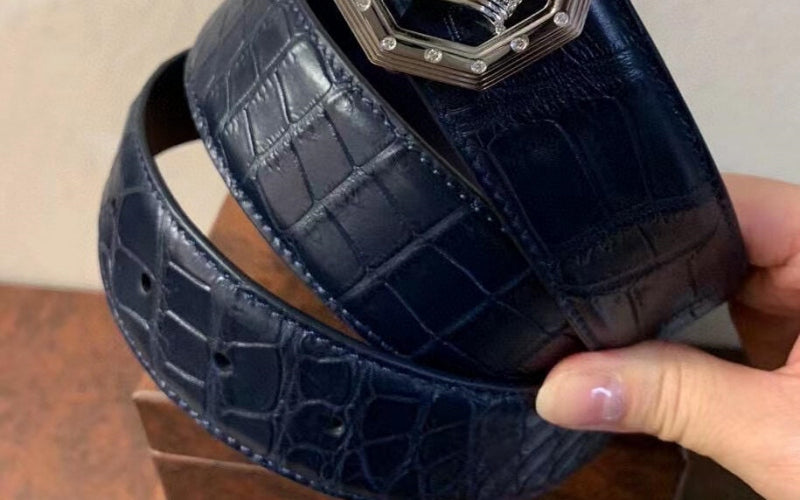
The belly is the most prized section of any crocodilian hide. Scales here are flat, uniform, and free of osteoderms, producing leather that's supple enough to wrap around your waist without cracking or bunching. A belly-cut belt from a Grade 1-2 skin shows symmetrical "tile" patterns that absorb dye evenly and develop rich patina over decades. This is the cut used in virtually all luxury crocodile belts — including every belt in BELTLEY's crocodile collection.

Hornback Cut — The Statement Maker
The hornback runs along the dorsal ridge of the crocodile, featuring raised, bony scales that create a dramatic three-dimensional texture. According to AMTAN's leather identification guide, hornback leather is thicker and more rigid than belly leather, making it better suited to wider casual belts (1.5"+) than slim dress belts. Hornback tanning takes significantly longer — 12+ months versus 8-10 for belly — because the bone structures require additional processing.
Flank and Tail Cuts
Flank leather (the sides between belly and back) has a transitional scale pattern — less uniform than belly, less dramatic than hornback. It's commonly used in smaller goods like wallets and watch straps. Tail leather is narrow and features elongated rectangular scales; it occasionally appears in belt accents or braided designs but rarely as a primary belt strap due to its limited width.

What Crocodile Leather Finishes Are Available for Belts?
Crocodile belts come in four primary finishes — glazed, matte, sueded, and semi-glazed — each creating a fundamentally different aesthetic from the same raw hide. The finish you choose determines whether your belt reads as black-tie formal or weekend casual.
| Finish | Shine Level | Formality | Best Paired With | Durability Note |
|---|---|---|---|---|
| Glazed | High gloss | Formal / business | Suits, dress shoes | Shows scratches more easily |
| Semi-glazed | Moderate sheen | Business casual | Sport coats, chinos | Good balance of sheen and resilience |
| Matte | No shine | Smart casual / everyday | Jeans, knitwear, blazers | Most scratch-resistant |
| Sueded | Soft, velvety | Casual / statement | Denim, textured fabrics | Requires more frequent conditioning |
Glazed Finish
Glazed crocodile leather undergoes a multi-step polishing process using agate stones or glass rollers that compress the surface fibers and create a mirror-like sheen. The result is the most formal crocodile finish — the one you see on luxury house belts paired with tuxedos. Taza Leather's finishing guide notes that glazed finishes highlight the natural color depth between scale ridges and recessed areas, creating a multi-dimensional effect.
Matte Finish
Matte crocodile skips the polishing stage, leaving the surface with its natural texture and zero reflectivity. This is the most versatile finish for daily wear — it hides minor scratches better than glazed, pairs with everything from suits to jeans, and aligns with the quiet luxury trend dominating 2026 fashion. Matte finishes also tend to develop the richest patina over time because the unpolished surface absorbs body oils and conditioners more deeply.

Sueded Finish
Sueded crocodile leather is buffed on the scale surface to create a soft, nap-like texture similar to suede but with visible scale patterns underneath. BELTLEY's black sueded Nile crocodile belt is a strong example — it reads as casual and textured while retaining the exotic scale structure. Sueded finishes require slightly more care and conditioning than glazed or matte because the raised nap is more susceptible to moisture absorption.
Semi-Glazed Finish
Semi-glazed sits between glazed and matte — a subtle sheen without the mirror effect. It's the most office-friendly option: polished enough for client meetings, understated enough that it doesn't draw attention in conservative environments.

How to Choose the Right Crocodile Leather Type for Your Belt
Match the species to your budget, the cut to your use case, and the finish to your wardrobe. Here's a quick decision matrix:
- Formal / dress belt → Nile crocodile, belly cut, glazed or semi-glazed, 1.25"-1.38" width
- Business casual / everyday → Nile crocodile, belly cut, matte, 1.38"-1.5" width
- Casual / weekend → Nile crocodile, belly or hornback, matte or sueded, 1.5" width
- Statement / bold → Saltwater crocodile belly or Nile hornback, any finish, 1.5"+ with sculptural buckle
- Avoid → Caiman at any price point for belts — the bone deposits cause cracking within months of regular wear
The single biggest mistake buyers make is fixating on species while ignoring the cut and finish. A matte Nile belly belt and a glazed Nile belly belt are the same species and cut — but they belong in completely different outfits. For a deeper look at why exotic leather commands premium pricing and where your money goes, we've broken down the full cost chain.

The Bottom Line
Crocodile leather types for belts aren't one-size-fits-all — the species, hide cut, and finish each contribute distinct qualities that determine how a belt looks, feels, and performs. Nile crocodile belly leather in a matte or semi-glazed finish covers the widest range of occasions. Hornback adds texture for casual wear.
Glazed finish elevates to formal. And caiman — regardless of how it's marketed — doesn't belong on a belt that needs to flex hundreds of times.
At BELTLEY, every belt is handcrafted from Nile crocodile belly leather, finished to order, fitted with 316L stainless steel buckles, and backed by a 10-year warranty. Browse the full crocodile and alligator collection and choose the type that fits your style.

Frequently Asked Questions
Q: What is the best crocodile species for a belt?
Nile crocodile (Crocodylus niloticus) is the best all-around species for belts. Its belly scales balance size, symmetry, and flexibility — creating a clean visual pattern that wraps well at standard belt widths (1.25"-1.5") without awkward scale breaks.
Q: What is the difference between belly cut and hornback crocodile?
Belly cut uses the smooth, flat underside scales — ideal for dress and everyday belts due to its flexibility and uniform pattern. Hornback uses the raised dorsal ridge scales for a dramatic, textured look better suited to casual and wider belts. Belly is more versatile; hornback is more distinctive.
Q: Is glazed or matte crocodile better for everyday wear?
Matte is better for everyday wear. It hides minor scratches, pairs with a wider range of outfits, and develops richer patina over time. Glazed is better reserved for formal occasions where the high-shine finish complements a suit or tuxedo.
Q: Why is caiman leather cheaper than Nile crocodile?
Caiman hides contain bony calcium deposits (osteoderms) throughout the leather that make it stiff and prone to cracking. These structural limitations reduce its value and restrict its use to rigid applications like boot shafts. A genuine Nile or saltwater crocodile belt starts at $118+; a "crocodile" belt under $100 is almost certainly caiman.
Q: How can you tell what type of crocodile leather a belt is made from?
Look for sensory pores (tiny dots on each scale) — their presence confirms true crocodile rather than alligator. Scale size and pattern indicate species: Nile has medium balanced scales, saltwater has larger pronounced scales, caiman has rough, bumpy scales with visible bone ridges. The finish (glossy vs. matte vs. textured) tells you the tanning treatment.
Q: Does the hide cut affect how long a crocodile belt lasts?
Both belly and hornback cuts last 20-30 years with proper care. However, belly cut is more flexible and better resists cracking along fold lines — making it the superior choice for belts that bend around your waist daily. Hornback's rigidity works in its favor for display-oriented pieces worn less frequently.
,%20saltwater%20crocodile%20(largest%20scales),%20and%20caiman%20(budget%20tier%20with%20serious%20durability%20...)