Can I Wear a Brown Belt with Black Shoes? (Yes — Here's How)
TL;DR: Quick Answer and main takeaways
- In formal settings — job interviews, business dress, black-tie adjacent events — match your belt to your shoes. Full stop.
- In casual and smart-casual contexts, a brown belt with black shoes is perfectly acceptable and often looks better than a forced black-on-black match.
- The key variables: shade of brown (darker = safer), outfit formality, and metal hardware consistency.
This is one of those style questions where the traditional answer and the correct answer are two different things. The old rule — belt must match shoes, always — made sense when men's wardrobes were more formal and less varied. Today, strict matching in a casual outfit often looks more awkward than an intentional contrast does.
The real answer is context-dependent. There are situations where you should absolutely match your belt to your shoes, and situations where a brown belt with black shoes is not only acceptable but the better-looking choice. This guide covers both.

Can You Wear a Brown Belt with Black Shoes?
Yes — in casual and smart-casual outfits, a brown belt with black shoes works well when the brown is dark (espresso, chocolate, dark cognac) and the outfit doesn't require formal coordination. In formal dress contexts — suits for interviews, business professional, or black-tie — the traditional rule holds: black shoes require a black belt.
The distinction isn't about the colors themselves. Brown and black are both neutrals, and as Permanent Style's analysis of color theory in clothing points out, neutral combinations read as intentional contrast rather than error when the tones are considered. The issue is whether the outfit's formality level demands precise coordination. Formal contexts do. Casual ones don't.

Where Did the "Match Belt to Shoes" Rule Come From?
The rule originated in mid-20th century dress codes, when men's daily wardrobes skewed heavily formal — suits, dress shoes, and structured accessories were the norm, not the exception. In that context, precise leather coordination signaled attention to detail and social fluency. Black Lapel's guide to matching belt and shoes traces this convention well: it was about polish in a world where polish was the baseline.
As dress codes relaxed across every industry and occasion, the rule's original context largely disappeared. Today, most men wear casual trousers, chinos, or jeans far more often than a dress suit. Applying a formal coordination rule to an informal wardrobe creates its own kind of mismatch — the outfit looks like it's trying too hard in the wrong direction.
The result is what Bespoke Post calls "the new rules of matching belt to shoes": match strictly for formal occasions, coordinate intentionally for everything else.

When Should You Still Match Belt and Shoes?
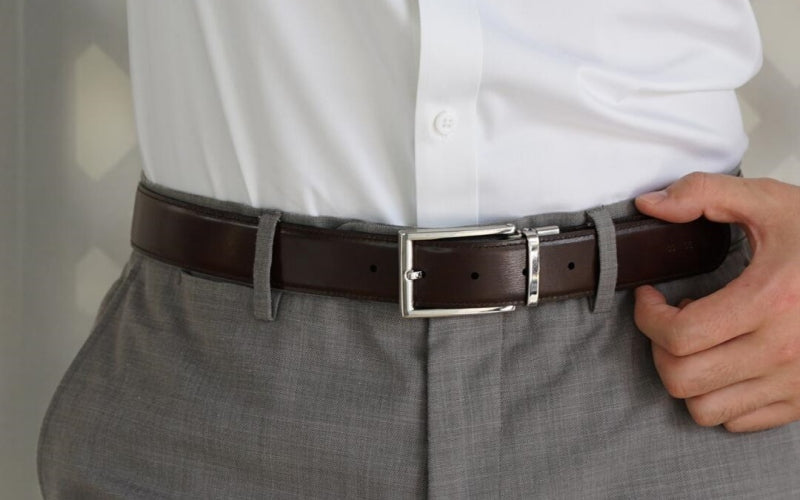
Always match your belt to your shoes when wearing a business formal or black-tie outfit. In these contexts — suit and tie, dress trousers with a blazer, or any event where polished presentation matters — a brown belt with black oxfords or dress shoes reads as an oversight, not a style choice. The formality of the occasion demands coordination.
The specific scenarios where matching is non-negotiable:
- Job interviews — first impressions in formal settings favor conventional coordination
- Business professional dress codes — client-facing roles, boardroom settings, formal presentations
- Weddings as a guest — especially black-tie or cocktail attire
- Formal events — anything where a suit is expected
Outside of these, the rule is a guideline rather than a law. Nimble Made's breakdown of belt-shoe matching puts it clearly: in truly formal dress, match the leathers; in everything else, use judgment.

How to Pull Off a Brown Belt with Black Shoes
If the outfit is casual or smart-casual and you're going with a brown belt and black shoes, four things determine whether it looks intentional or accidental.
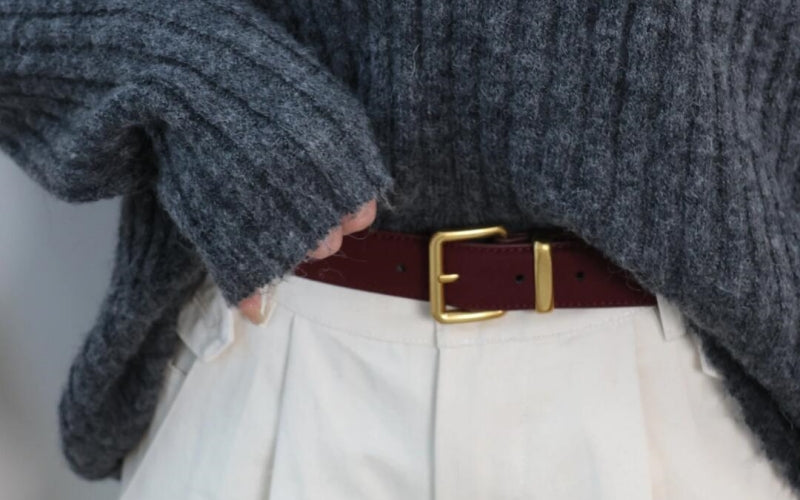
Choose a dark brown, not a light tan. This is the single most important variable. A light tan or saddle-brown belt against black shoes creates high contrast that reads as a mistake. A dark espresso, chocolate, or dark cognac belt has enough visual weight to sit confidently next to black leather without the gap looking like a mismatch. Our brown leather belt collection includes options in espresso and dark cognac finishes that are specifically built for this kind of versatile wear.
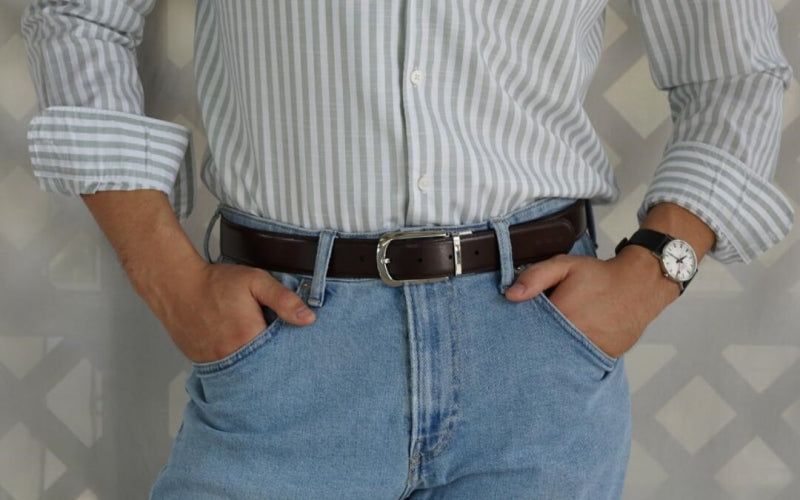
Keep the outfit casual or smart-casual. Jeans, chinos, casual trousers, and relaxed tailoring all tolerate the brown-black combination. The relaxed formality of these garments gives the contrast room to read as intentional. The same combination on a formal suit doesn't have that runway. As Duvall Leather's guide to matching leather belts and shoes notes, the outfit's overall register determines whether a leather contrast works or clashes.
Match your metals. Even if the leather colors differ, the hardware should coordinate. A silver buckle belt with silver-toned shoe hardware stays cohesive. A gold buckle with silver shoe hardware introduces a second mismatch that compounds the first. This is the one rule that holds regardless of formality — keep your metals consistent. Bespoke Unit's guide on contrast in menswear explains why metal consistency anchors an outfit when other elements deliberately contrast.
Don't add a third conflicting element. If your belt and shoes are already contrasting intentionally, keep the rest of the outfit clean. A brown belt, black shoes, and a mixed-pattern jacket is too much happening at once. The contrast works when it's the only contrast in the outfit.
For a detailed look at when each color is the stronger choice, our brown belt vs. black belt guide maps the full decision across outfit types and occasions. And if you're also working with black pants in the same combination, this is addressed directly in our post on brown belt with black pants and black shoes.
Does This Rule Work the Same Way for Women?
For women, the brown-and-black combination is more broadly accepted and less rule-bound than in men's dress. Fashion conventions around women's accessories have never enforced the same strict leather-matching requirements that shaped men's dress codes, so a brown leather belt with black ankle boots or black heels is a standard, unremarkable combination in most women's wardrobes.
The same principles still apply: darker browns work better with black than lighter tans, and the outfit's formality sets the tolerance for contrast. But for women, the starting assumption is flexibility rather than coordination — intentional mixing of black and brown in accessories is a recognized styling approach, not an exception to a rule.
Our women's belt matching guide covers the full color framework for building outfits around belt color, including the black-and-brown combination in more detail.

The Bottom Line
The brown belt with black shoes question has a simple answer once you separate context from convention. Formal outfit? Match the leathers — the rule exists for good reason in those situations. Casual or smart-casual outfit? A dark brown belt with black shoes is not only acceptable, it's often the more interesting choice than a forced black-on-black.
What matters isn't the rule — it's whether the combination looks considered or careless. Dark brown against black, consistent hardware, a relaxed outfit register, and clean execution: that combination looks intentional every time. A good starting point is a dark espresso or chocolate full-grain leather belt — the leather's natural variation and matte finish sit comfortably next to black without screaming contrast. For everything you need on the broader question of coordinating belt and shoe color, our belt and shoe matching guide has the full picture.
Frequently Asked Questions
Q: Is it a fashion mistake to wear a brown belt with black shoes?
In formal settings, yes — it breaks the standard coordination rule and reads as an oversight. In casual and smart-casual outfits, no. A dark brown belt with black shoes is widely accepted and recognized as intentional contrast by most style references today. Choosing a dark shade of brown (espresso, chocolate) and keeping the rest of the outfit simple makes the combination work cleanly.
Q: What shade of brown belt works best with black shoes?
Dark brown — espresso, chocolate, or dark cognac — works best. Light tan, saddle brown, or natural brown creates too much contrast against black, which reads as accidental rather than intentional. The closer the brown is to black in visual weight, the more considered the combination looks.
Q: Should belt buckle color match shoe hardware when mixing brown and black?
Yes. When the leather colors are already contrasting, metal consistency becomes more important as an anchor. If your black shoes have silver hardware, use a silver buckle belt. If the shoe hardware is gold-toned, match with a gold buckle. Mismatched metals on top of mismatched leathers adds compounding visual conflict.
Q: Can women wear a brown belt with black shoes?
Yes — and it's less rule-bound for women than for men. In women's styling, mixing black and brown accessories is a widely accepted approach. The same principles apply: darker browns pair more naturally with black than light tans, and formal occasions favor coordination. But the starting assumption for women's accessories is flexibility.
Q: What outfits make a brown belt and black shoes combination work?
The combination works best with: dark jeans and a white or grey shirt; chinos in olive, navy, or grey; a casual blazer with trousers; or a smart-casual sweater outfit. It doesn't work in business formal or suit contexts. The outfit's casual register gives the leather contrast room to read as a deliberate style choice rather than an error.