Box-Frame vs. Prong Buckle: When to Wear Each
Quick answer: A prong buckle uses a pivoting pin pushed through holes in the strap, set in a rounded or oval frame — the classic, versatile belt closure. A box-frame buckle uses a squared, angular frame for a cleaner, more modern look. Prong buckles suit everyday and traditional wear; box-frame buckles lean dressy and minimalist.
Last updated: May 2026 • By BELTLEY Editorial
TL;DR:
- A prong buckle is the timeless frame-and-pin design that threads through punched holes.
- A box-frame buckle is a squared, angular frame prized for clean, modern, dressy lines.
- Both are reliable; the choice is mostly about shape, formality, and the look you want.
- Prong = versatile everyday workhorse. Box-frame = sleek, minimalist, suit-friendly.
If you have ever stood in front of a belt rack wondering why two buckles that do the same job look so different, you are looking at the box-frame buckle versus the prong buckle. Both have anchored belts for generations — the prong design has secured straps since antiquity, with Romans wearing them on armor — but they send very different style signals. One is the rounded, traditional pin buckle on most casual belts; the other is the squared-off frame you see on sharp modern dress belts. This guide breaks down how each works, when to wear each, and how to pick the right one. For the full lineup of closures, our types of belt buckles guide covers every style side by side.
Frame Shape: Your Two-Second Pick
Round-frame prong or squared box-frame:
| Your situation | Go with |
|---|---|
| One buckle for everything | Classic prong — the universal closure that no occasion rejects. |
| Minimalist modern dress | Box-frame — the squared geometry reads contemporary and intentional. |
| Heavy casual wear | Prong — fewer corners, simpler mechanics, ages gracefully. |
| Matching your watch design | Angular watch case → box-frame; round case → classic prong. Nobody notices consciously; everybody notices. |
Both geometries in solid metal: BELTLEY's collection.
What is a prong buckle?
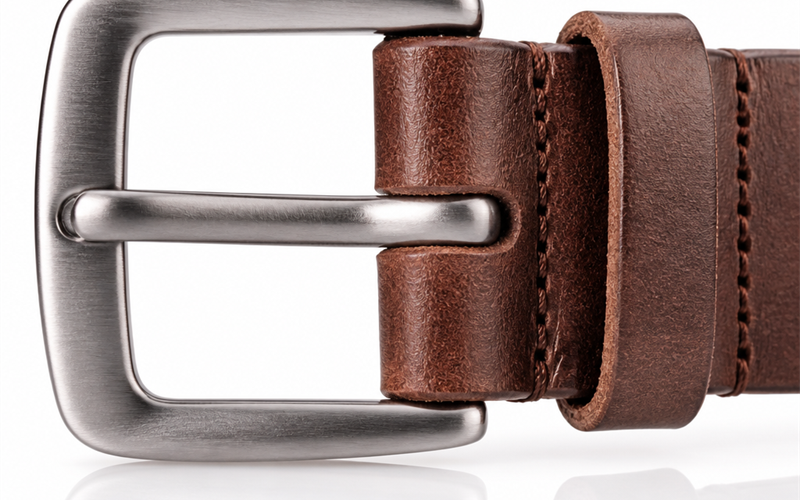
A prong buckle is the classic belt closure: a metal frame with a pivoting pin (the prong) attached to a center bar. You thread the strap through the frame, push the prong through a punched hole, and the pin holds the belt at that length.

This is the design most people picture when they hear "belt buckle." The frame, bar, and prong make up a closure that is reliable, easy to use, and endlessly adjustable across the strap's holes. Prong frames come in rounded, oval, square, or D-shaped silhouettes, which is part of why the category is so broad. You will find prong buckles on everything in our casual belts range, from rugged everyday straps to dressier styles.
What is a box-frame buckle?
A box-frame buckle is a belt buckle built on a squared, angular rectangular frame rather than a rounded one. The crisp right angles give it a sharper, more architectural look, which is why box-frame designs read as modern and dressy.

Mechanically, many box-frame buckles still use a prong through holes — the difference is the geometry of the frame, not the fastening method. The squared frame strips away the traditional curves for something cleaner and more contemporary. Some box styles minimize or hide the pin entirely for an even smoother face. The result pairs especially well with tailored trousers, which is why box-frame buckles show up so often on dress belts.
Box-frame vs. prong buckle: what's the real difference?
The real difference is geometry and tone, not mechanics. A prong buckle typically uses a rounded or oval frame and reads traditional and versatile. A box-frame buckle uses a squared, angular frame and reads modern and formal. Both can use a pin-through-holes closure.

Think of it as the same engine in two different bodies. The prong format is the all-rounder — equally at home with jeans, chinos, or a suit. The box-frame is the specialist, tuned for sleek, minimal outfits where clean lines matter. Neither is "better"; they solve different style problems. If you are building a collection, our guide to the different types of belts shows how each closure fits into a rounded rotation.
| Feature | Prong Buckle | Box-Frame Buckle |
|---|---|---|
| Frame shape | Rounded, oval, or D-shaped | Squared, angular rectangle |
| Mechanism | Pin through punched holes | Often pin; sometimes minimized/hidden |
| Style tone | Traditional, versatile | Modern, minimalist, dressy |
| Best outfits | Jeans, chinos, casual to formal | Suits, tailored trousers |
| Adjustability | Multiple holes | Holes or set position |
| Vibe | Timeless workhorse | Sharp and contemporary |
Key stat: The prong buckle is one of the oldest fastening designs still in daily use — the basic frame-and-pin format has secured straps for over 2,000 years, since the Iron Age.
When should you wear a box-frame buckle?
Wear a box-frame buckle when the outfit is tailored and you want a clean, intentional finish. Its squared lines suit suits, dress trousers, and smart-casual looks where a rounded buckle might feel too rugged or traditional.

The box-frame shines in monochrome and minimalist wardrobes — its geometry echoes the sharp lines of a well-cut blazer. Keep the strap slim (around 1.38 inches) and the metal finish muted, and the belt disappears into the outfit the way a dress belt should. It is the quietly modern choice for someone who notices details.
When should you wear a prong buckle?
Wear a prong buckle when you want one belt that works almost everywhere. The rounded frame-and-pin design is the most versatile closure made, equally appropriate with denim on the weekend and trousers at the office.

This is the buckle to reach for when versatility matters more than statement. A brown full-grain prong belt is the single most useful belt most people own, because it crosses dress codes without effort. If you only buy one belt, make it a quality prong style — and understand the point a good buckle serves before you spend.
The Bottom Line
Box-frame and prong buckles are two takes on the same job: holding your belt securely while finishing the outfit. The prong is the rounded, time-tested all-rounder; the box-frame is the squared, modern specialist for tailored looks. Most well-built wardrobes have both — a versatile prong belt for daily wear and a sleek box-frame for dressing up. At BELTLEY, we build both on full-grain leather with solid metal hardware and a 10-year warranty, so the closure you choose is the only real decision. Explore the full range in our belt buckles collection and pick the shape that matches your style.
Frequently Asked Questions
Q: Is a box-frame buckle more formal than a prong buckle?
Generally, yes. The squared, minimalist lines of a box-frame buckle read as more modern and dressy, making it a natural fit for suits and tailored trousers. A rounded prong buckle is more versatile and can swing casual or formal depending on the strap and finish.
Q: Do box-frame buckles use holes like prong buckles?
Often, yes. Many box-frame buckles still use a prong pushed through punched holes — only the frame shape is different. Some box-style designs minimize or hide the pin for a cleaner face, so check the specific buckle if a holeless look matters to you.
Q: Which buckle is more durable?
Durability comes from the materials and construction, not the frame shape. A solid brass or stainless steel buckle — whether rounded prong or squared box-frame — will outlast a hollow or plated one. Focus on metal quality and how the buckle attaches to the strap.
Q: Can I put a box-frame buckle on any belt?
Not always. Buckle and strap compatibility depends on width and the attachment style (snap, screw, or stitched). A 1.5-inch buckle needs a 1.5-inch strap, and not every buckle is removable. Confirm width and fastening before swapping.