Belt With Overalls and Coveralls: Yes or No?
Quick answer: Functionally, no — overalls are held up by shoulder straps and coveralls by a front fastening, so neither needs a belt to stay on. As a styling choice, yes: a belt worn over the waist of loose overalls or a coverall cinches a shapeless silhouette into a defined, intentional one.
Last updated: May 2026 • By BELTLEY Editorial
TL;DR:
- A belt with overalls isn't functional — straps do the holding — but it's a legitimate fashion move for shaping.
- Cinch a belt over the waist of oversized overalls or a boilersuit to create a defined silhouette.
- Workwear context: some overalls have waist belt loops for a tool belt or to anchor the straps.
- Skip the belt on well-fitted or classic farmer-style overalls where the shape already works.
Overalls and coveralls are the rare garments that hold themselves up without a waist closure. Wikipedia explains that modern overalls use adjustable shoulder straps and belt loops to attach those straps, while a boilersuit (coverall) fastens up the front with buttons or a zip. Neither relies on a belt for function. So the real question isn't "do they stay up?" — it's "does a belt make them look better?" Often, yes. Below is the honest breakdown for workwear and fashion alike. Browse our casual belts as you read, and pair this with our matching-a-belt guide.

Do You Need a Belt With Overalls?
No — overalls are designed to stay up on their own. Adjustable shoulder straps carry the garment, so a belt serves no holding function. Any belt you add is purely for style: defining the waist, shaping an oversized fit, or leaning into a workwear aesthetic.

This is what makes the belt optional in the truest sense. A belt normally holds trousers through belt loops, but overalls bypass that system entirely with their bib-and-strap construction. Even style guides that field the question — like Threadcurve's take on wearing a belt with overalls — land on "it depends on the style," not "you need one." So you're never wearing a belt out of necessity here. You're wearing it because it improves the look, or you're not wearing it at all.
Key stat: Overalls shifted from suspender buttons to belt loops for attaching the shoulder straps after Lee introduced a hookless fastener in 1927 — a reminder that the loops on many overalls anchor straps, not necessarily a belt.
When Should You Wear a Belt Over Overalls?
Wear a belt over overalls when the fit is loose or oversized and you want a defined waist. Cinching a belt at the natural waistline transforms a shapeless silhouette into a flattering, intentional one — the single most effective way to style baggy overalls in 2026.

This is the core fashion case. Oversized and slouchy overalls are popular but can read as formless; a belt at the waist instantly adds structure and balance. The same shaping logic applies to cinching other loose garments — it's why a statement belt over a dress works. A medium-to-wide leather belt is ideal for the cinch; our men's belts and women's belts ranges both cover the widths that hold a defined waist.
| Garment | Holds itself up? | Belt needed? | Belt as styling? |
|---|---|---|---|
| Bib overalls (fitted) | Yes (straps) | No | Optional |
| Bib overalls (oversized) | Yes (straps) | No | Yes — cinch the waist |
| Coveralls / boilersuit | Yes (front zip) | No | Yes — define the silhouette |
| Workwear overalls | Yes (straps) | No | Belt loops for tool belt |
Can You Wear a Belt With Coveralls?
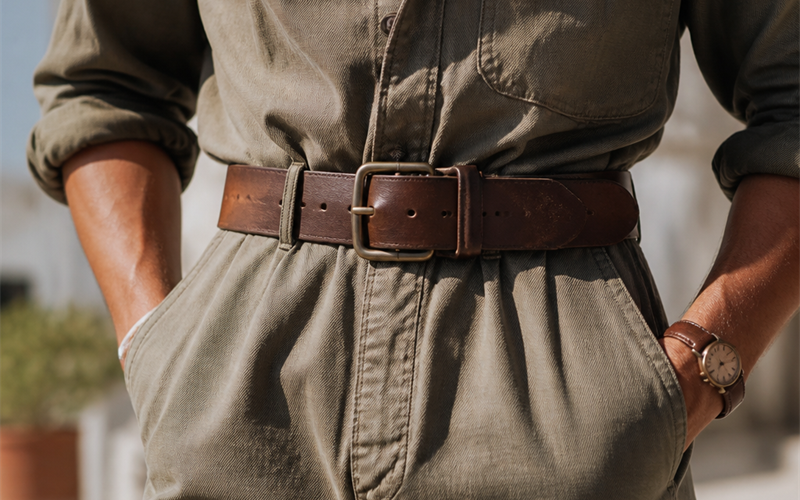
Yes — and it's often the best way to style a loose coverall. A boilersuit is a one-piece garment with a straight, often shapeless cut. Adding a belt at the waist breaks up the column, creates a defined middle, and turns utilitarian workwear into a deliberate jumpsuit look.

Coveralls benefit even more than overalls from a belt, because they have no built-in waist definition at all. A leather belt cinched at the natural waist is the difference between "borrowed a mechanic's suit" and "styled a utility jumpsuit." Keep the belt substantial enough to hold the cinch — a slim belt can get lost in the fabric. For a rugged, workwear-consistent finish, a sturdy full-grain strap from our full-grain leather belts suits the aesthetic, and the same utility logic carries over from our belt with cargo pants guide.
When Should You Skip the Belt?
Skip it on well-fitted overalls and classic workwear looks where the shape already works. Traditional farmer-style or slim-fit overalls don't need a waist belt — adding one can look forced and clutter a clean, established silhouette. The same goes for coveralls worn as genuine work gear.

Restraint matters here. The belt is a tool for fixing a too-loose fit or making a fashion statement; if neither applies, the overalls look better without it. And in actual work settings, any waist belt should be functional — a tool belt through workwear loops — rather than decorative.
The Bottom Line
So, a belt with overalls or coveralls: yes or no? Functionally, no — straps and front fastenings already hold these garments up, so you never need one. But as a styling move, a belt is one of the smartest tools you have: cinch it over loose overalls or a boilersuit and a shapeless garment gains a defined, intentional waist. Skip it when the fit already works or you're dressing for real work. At BELTLEY, we'd tell you a belt here is about shape, not function — choose a leather strap with enough presence to hold a clean cinch, and leave it off when the silhouette doesn't need rescuing. Start with our casual belts collection.
Frequently Asked Questions
Q: Can you wear a belt with overalls?
Yes, as a styling choice. Overalls stay up on their own via shoulder straps, so a belt isn't functional — but cinching one over the waist of loose or oversized overalls creates a defined, flattering silhouette. Skip it on well-fitted pairs.
Q: Do coveralls need a belt?
No — a boilersuit fastens up the front and stays on without one. But a belt at the waist is the best way to style a loose coverall, breaking up its straight cut and turning utilitarian workwear into a deliberate jumpsuit look.
Q: What kind of belt goes over overalls?
A medium-to-wide leather belt with enough presence to hold a clean cinch at the waist. Slim belts can get lost in the heavier fabric. For a workwear-consistent look, a sturdy full-grain leather belt matches the rugged aesthetic best.
Q: Why do overalls have belt loops if you don't need a belt?
On many overalls, the waist loops exist to attach the shoulder straps rather than to hold a belt. In workwear, they can also anchor a functional tool belt. They're not a sign that a fashion belt is required.