Antique Buckle vs. Polished: Which Finish Actually Wins?
TL;DR:
- Antique buckles conceal daily wear better, develop character over time, and suit casual, rugged, and heritage styles
- Polished buckles deliver a sharp, formal look — ideal for dress belts and business attire, but they show scratches immediately
- The 2026 trend leans heavily toward aged and antique finishes for everyday and casual wear
There's a moment every serious belt buyer eventually hits: you've found the perfect leather, the right width, the right buckle shape — but now you're staring at two finish options. Antique brass or mirror-polished chrome? Aged bronze or bright silver?
It sounds minor. It isn't. The finish on your buckle shapes how your entire outfit reads — formal or casual, deliberate or effortless, refined or raw. This guide gives you clear, actionable guidance to settle the antique buckle vs. polished debate for your wardrobe once and for all.
Antique or Polished: Pick by Lifestyle
The finish question answers itself once you pick a row:
| Your situation | Go with |
|---|---|
| Daily wear, hate visible scratches | Antique — wear marks blend into the finish instead of standing on it. |
| Dress belt, formal settings | Polished — formality demands shine; just accept it shows its history. |
| Heritage/Western wardrobe | Antique brass — the 2026 trend lean and the natural fit. |
| One belt for both worlds | Brushed (satin) finish — the diplomatic middle that passes in either room. |
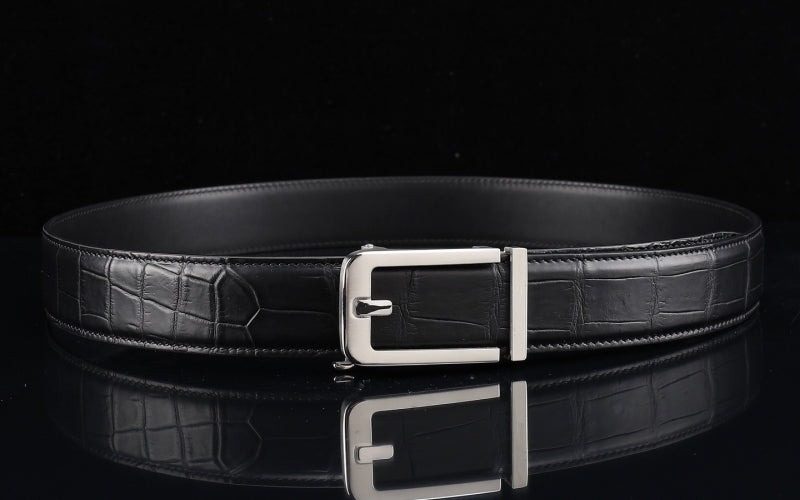
All three finishes on full-grain straps: BELTLEY's men's collection.
What Is the Difference Between Antique and Polished Buckles?
Antique buckles have a matte, darkened, or aged surface finish created through chemical oxidation, hand-antiquing, or intentional patination. Polished buckles are mirror-bright, smooth, and highly reflective. These aren't just aesthetic opposites — they serve different styling functions, age differently over time, and pair best with entirely different leathers and outfit contexts.

Antique finishes appear most often on brass, bronze, and copper hardware. Polished finishes dominate stainless steel, nickel, and chrome-plated metal. The choice is ultimately between old-world character and modern precision — and the right answer depends entirely on what you're dressing for.
For a broader look at how buckle mechanics factor in alongside finish, our types of belt buckles guide covers everything from box-frame to ratchet, plate to prong — useful context before narrowing down the hardware decision.
Are Antique Buckles Better Than Polished for Everyday Wear?
For most people doing everyday wear, antique finishes outperform polished ones. They conceal minor scuffs, don't show fingerprints, and improve with age rather than degrading. A polished buckle that picks up its first scratch looks worse immediately; an antique buckle absorbs that same wear invisibly — and sometimes the finish deepens in a way that adds character rather than detracting from it.
This holds up practically. Everyday use means repeated contact with keys, zippers, and belt loops. Mirror-polished surfaces make every mark visible against the high-reflectivity background. Matte and antique surfaces scatter light, masking imperfections naturally.
That said, "everyday" isn't a single context. If your daily uniform is business formal — tailored suits, dress shoes, structured meetings — a polished buckle reads more appropriate than an aged one. Everyday should be understood as what you actually wear most, not a default category.
BELTLEY's Heritage Brown Aged Full-Grain Belt pairs a hand-antiqued buckle with full-grain leather that builds its own patina alongside the hardware — a deliberate design decision that means the belt only looks better at year three than it did on day one.
Which Buckle Finish Works Best for Formal Wear?
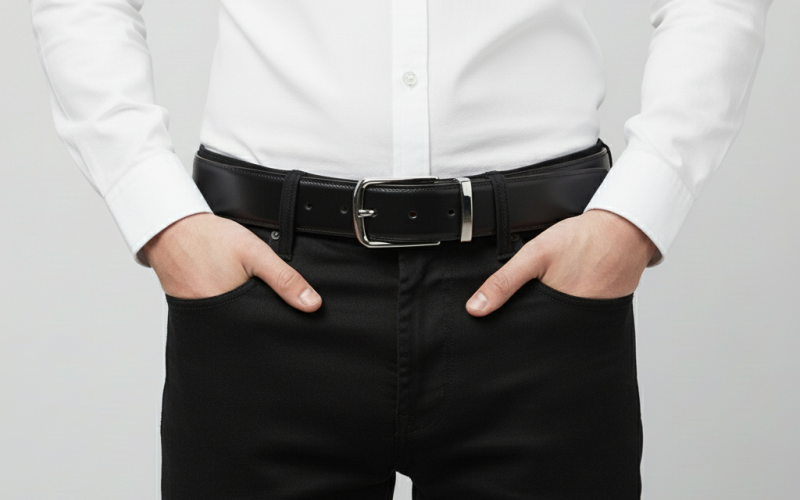
For business formal and black-tie attire, polished buckles are the stronger choice. A mirror-bright finish reflects light the same way polished dress shoes and fine watch cases do — it signals intention and care, which reads as sophisticated in formal settings. Traditional dress belts pair with a polished buckle, typically silver or gold tone, at a slim 1.25″–1.38″ width.

The pairing rules are direct: polished silver-tone (stainless steel or nickel) pairs with black leather for business formal and black-tie. Polished gold-tone (brass or gold-plate) pairs with brown or tan leather for business casual and smart-casual dressing. According to Real Men Real Style's accessories matching guide, matching buckle tone to watch case is the single highest-impact way to look intentional in formal dress.
The BELTLEY dress belt collection offers slim-profile options with polished plate buckles — clean hardware that won't compete with tie bars or cufflinks. For guidance on coordinating the full picture, our post on whether your belt buckle should match your watch lays out the rules clearly.
Do Antique Buckles Tarnish Over Time?
Solid brass and bronze antique buckles do not tarnish the way silver does — they develop a deeper, richer patina, which is a fundamentally different process. Tarnish on silver looks dull and dirty. Patina on brass looks intentional and lived-in. Buyers of genuine antique-finish hardware typically consider the deepening patina a feature, not a defect.
The real risk is low-quality plated buckles marketed as "antique." A thin electroplated antique finish over zinc alloy or iron will peel and corrode — it won't age elegantly. Corrosionpedia's breakdown of brass patina versus electroplated zinc corrosion documents why solid metals age gracefully while plated alternatives fail. Solid brass, solid bronze, and BELTLEY's antiqued stainless steel buckles use no thin plating over a lesser base metal. The finish is applied to or integral with the metal itself, which is why it holds under years of real-world use.
If you want buckle hardware that develops beautifully rather than just degrading, BELTLEY's brass buckle belts use solid brass throughout — not plated substitutes — with a full 10-year warranty on materials and construction.
Which Buckle Finish Is More Versatile?
Antique and aged finishes are more versatile across outfit contexts than polished. A well-chosen antique brass buckle works with denim, chinos, leather boots, raw denim, workwear, and heritage suiting. A polished chrome buckle is mostly limited to formal and smart-casual territory — it looks out of place with worn denim or rugged outerwear.

Tone matters here too. Antique gold/brass is the most flexible finish overall — warm, natural, and compatible with both brown and tan leathers across a wide range of contexts from casual to business casual. Polished silver is the most formally versatile, covering business formal through black-tie. Polished gold sits between them — refined but dressier than antique brass, which narrows its range slightly.
Gentleman's Gazette's guide to belt and hardware pairing covers this in detail. The practical takeaway: building a wardrobe around antique brass (casual/everyday) paired with one polished stainless option (formal) gives you full hardware coverage for any occasion with just two belts.
For the full picture on coordinating hardware across your accessories, our guide on matching your belt buckle with your jewelry is a useful companion read.
Which Metal Makes the Best Antique-Finish Buckle?
The finish is only half the story. The underlying metal determines how long that finish performs.

| Metal | Common Finish | Durability | Notes |
|---|---|---|---|
| Stainless Steel | Polished or antiqued | Excellent — corrosion and rust resistant | BELTLEY's standard hardware material |
| Solid Brass | Antique, polished, or raw | Very good — develops natural patina over time | The classic choice for heritage belts |
| Zinc Alloy / Zamak | Often plated antique | Fair — prone to peeling with wear | Common in budget belts; avoid |
| Nickel | Polished | Good — but nickel allergy risk for some wearers | Widespread in mass-market belts |
| Copper | Antique or patinated | Good — develops blue-green patina over time | Distinctive look, less common |
| Sterling Silver | Polished | Fair — tarnishes faster without regular polishing | Primarily decorative and western-style use |
BELTLEY uses stainless steel and solid brass exclusively across its hardware range — no zinc alloy, no thin electroplating. Both metals hold their finish under real-world conditions and are covered by the 10-year warranty on materials and construction. The stainless steel buckle belts collection includes both polished and antiqued options in the same premium base material.
AZoM's material profile of stainless steel documents the corrosion resistance, tensile strength, and biocompatibility that make this alloy the standard choice for premium wearable hardware.
How to Match Your Buckle Finish to Your Outfit
The decision tree is simpler than it looks once you break it down by context:
Go antique when:
- Wearing denim, chinos, or casual trousers
- Pairing with brown, tan, or cognac leather
- Wearing heritage, workwear, or rugged aesthetics
- Your watch has warm-tone hardware (gold, rose gold, yellow gold)
- The rest of your outfit reads relaxed or textured
Go polished when:
- Wearing dress trousers, suits, or formal separates
- Pairing with black leather or fine calf leather
- Attending formal events, interviews, or important meetings
- Your watch has a polished case (silver/chrome)
- Your other accessories are clean and minimal
One rule that holds consistently: don't mix warm-tone hardware with cool-tone hardware in the same outfit. An antique brass buckle with a polished silver watch looks mismatched in a way that polished gold or antique bronze with the same watch would not. For a comprehensive breakdown of the matching logic, the post on whether your belt buckle should match your jewelry walks through every scenario.
The Bottom Line
The antique buckle vs. polished debate doesn't have a universal winner — it has a contextual one. Antique finishes win for everyday wear, casual and heritage styling, and anywhere you want hardware that improves with age and absorbs daily use without showing it. Polished finishes win for formal dress, business attire, and contexts where mirror-bright precision signals the right intention.
For most people choosing a single belt to own, an antique brass buckle on full-grain leather is the most forgiving and versatile option — it will look better in three years than on day one, covers casual to business casual, and never looks overdressed. For a complete wardrobe, pair it with one polished stainless option for formal occasions. BELTLEY's handmade belt collection includes both finishes in durable full-grain leather, all at fair DTC pricing with free worldwide shipping and a 10-year warranty — no Brand Tax attached.
Frequently Asked Questions
Q: Is antique brass the same as regular brass?
No. Regular brass has a bright, gold-tone polished surface. Antique brass has been chemically treated or hand-aged to produce a darker, matte, and slightly worn appearance that mimics natural patina. Both start from the same base metal, but the finishing process is entirely different.

Q: Will a polished buckle scratch easily?
Yes — mirror-polished surfaces show scratches more readily than antique or brushed finishes because high reflectivity makes contrast visible against the shiny background. For daily wear, a brushed or antique finish maintains its appearance longer with zero extra maintenance.
Q: Can I wear an antique buckle with a formal outfit?
You can, but it's non-traditional. Antique brass pairs well with brown suede, heritage leather shoes, and smart-casual contexts. For black-tie or business formal with polished dress shoes, stick with a polished buckle that matches the shoe hardware. The mismatch between an aged finish and pristine formal wear tends to read as careless rather than intentional.
Q: What's better for humid climates — antique brass or polished stainless?
Polished or antiqued stainless steel is the better choice in humid environments. Brass oxidizes faster in high humidity, which can accelerate patina development unpredictably and produce greenish spots if not maintained. Stainless steel is corrosion-resistant by composition and is unaffected by moisture.
Q: How do I clean an antique buckle without stripping the finish?
Use a dry soft cloth for regular maintenance. Avoid metal polishes — they will remove the antiqued surface and expose bare metal underneath. For stubborn dirt, a slightly damp cloth followed by immediate drying is sufficient. Never use abrasive cleaners or steel wool on an antique finish.
Q: Why does my polished belt buckle turn green or black?
Green discoloration typically indicates copper oxidation — common in low-quality brass or zinc alloy buckles with copper content. Black tarnish on polished buckles is usually a reaction between skin oils, sweat, and metal plating. Both are signs of base-metal quality issues. High-grade stainless steel and solid brass buckles from reputable manufacturers do not develop this kind of discoloration under normal wear. See our post on why belt buckles turn green or black for a full breakdown.