Are Louis Vuitton Belts Made in France? “Made In” Label Matters
TL;DR: Quick Answer
- Not all Louis Vuitton belts are made in France — most are actually manufactured in Spain, with some produced in Italy and the USA.
- A "Made in Spain" stamp on an LV belt does not mean it's fake — it's a legitimate manufacturing origin.
- Only an estimated 15–20% of Louis Vuitton products carry the "Made in France" label today.
- The country-of-origin label has little to do with quality and everything to do with production logistics.

You flipped your new Louis Vuitton belt over, expecting to see "Made in France" — and instead found "Made in Spain." Panic sets in. Did you just spend $600 on a fake?
Relax. That Spanish stamp is perfectly legitimate, and the story behind where LV belts are actually made is more nuanced than most buyers realize. Here's what every smart shopper needs to know about Louis Vuitton belts and the "Made in" label.
Are Louis Vuitton Belts Actually Made in France?
Some are, but most are not. Louis Vuitton manufactures belts across workshops in France, Spain, Italy, and the United States. Spain handles the bulk of LV belt production — particularly the popular Monogram and Damier canvas styles. The "Made in France" stamp is typically reserved for select leather goods, limited editions, and high-demand pieces.
According to Louis Vuitton's own FAQ page, their leather goods collections are "exclusively produced in our workshops located in France, Spain, Italy and the United States." That's straight from the brand — no ambiguity. If you're curious about the broader comparison between these two origins, our breakdown of whether LV belts are made in France or Spain covers the specifics in detail.

Where Does Louis Vuitton Manufacture Most of Its Belts?
Spain is the primary production hub for Louis Vuitton belts. LV's workshop in Getafe, near Madrid, handles a significant volume of canvas belt production. The brand also operates multiple leather goods ateliers across France — over 20 workshops as of recent reports — but these facilities increasingly focus on handbags, trunks, and special-order pieces rather than standard belts.
Here's a quick breakdown of LV belt manufacturing by country:
| Country | What's Typically Produced | Notes |
|---|---|---|
| Spain | Monogram/Damier canvas belts, standard leather belts | Largest volume for belts |
| France | Select leather goods, limited editions, high-demand items | ~15–20% of total output |
| USA | Some leather belts for the American market | Workshops in Texas and California |
| Italy | Limited-edition and specialty pieces | Rare for standard belt lines |
Industry analysts estimate that only 15–20% of all Louis Vuitton products carry the "Made in France" label today. That figure has steadily declined as LVMH expanded production capacity to meet global demand, according to reports on LVMH's manufacturing strategy.

Does "Made in Spain" Mean a Louis Vuitton Belt Is Fake?
Absolutely not. A Louis Vuitton belt stamped "Made in Spain" is just as authentic as one stamped "Made in France." The country of manufacture has zero bearing on whether a product is genuine. Spanish-made LV belts use the same French-sourced materials — canvas from Normandy, leather from the Loire Valley — and follow identical quality standards enforced by LVMH.
The confusion stems from a widespread myth that "real" Louis Vuitton only comes from France. This belief has no basis in reality. Louis Vuitton has operated workshops outside France for decades. For a deeper look at how the "Made in France" label relates to authentication, check out our guide on Louis Vuitton Made in France: real or fake.
What actually matters for authentication are the date code format, stitching quality, hardware weight, and stamp clarity — not the country listed on the label. If you're unsure about a belt's legitimacy, our article on how to tell if a Louis Vuitton belt is real walks through every checkpoint.

Why Doesn't Louis Vuitton Make All Belts in France?
Demand outpaced French workshop capacity years ago. Louis Vuitton sells billions of euros in leather goods annually — the brand's Fashion & Leather Goods division generated €23.6 billion in revenue in 2023 alone. Manufacturing everything in France would mean either dramatically longer wait times or significantly higher prices (yes, even higher than $600 for a belt).
Expanding to Spain, Italy, and the USA allows LV to maintain production speed without sacrificing the craftsmanship standards the brand promises. The French luxury goods industry has increasingly globalized its supply chain while keeping design, quality control, and material sourcing firmly rooted in France.

What Are Louis Vuitton Belts Actually Made Of?
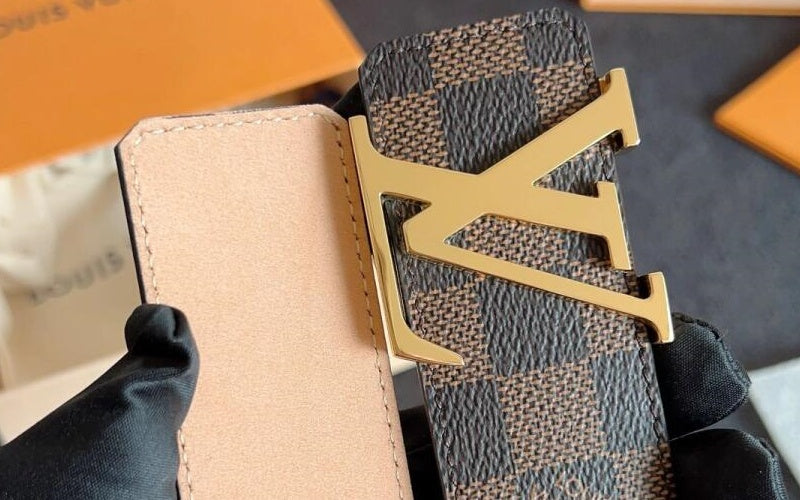
Most LV belts use coated canvas (the iconic Monogram and Damier patterns) bonded to a leather backing, not full-grain leather throughout. The canvas is PVC-coated cotton — durable, water-resistant, and distinctly not exotic leather. Leather-only LV belts exist (the Epi and Taiga lines use calfskin), but they're a smaller portion of the range.
We covered the full material breakdown in our guide on what Louis Vuitton belts are made of. The short version: you're paying primarily for brand equity and design, not for premium raw materials.
For buyers who prioritize the leather itself over the logo, handcrafted full-grain leather belts and genuine crocodile leather belts offer superior material quality — often at a fraction of the designer price tag, without the Brand Tax.

How to Check Where Your Louis Vuitton Belt Was Made
Every authentic LV belt has the manufacturing country stamped directly on the leather — usually on the back side near the buckle or on the belt tip. Here's how to read it:
- Locate the heat stamp — look for "LOUIS VUITTON" followed by "Made in [Country]" and a date code.
- Check the date code format — French-made items use codes starting with letters like AA, AN, AR, AS, BA, CT, FL, MB, MI, NO, RA, RI, SL, SN, SP, SR, TH, or VI. Spanish codes start with CA, GI, LO, LB, LM, or LW.
- Verify with a serial number — LV transitioned to microchip authentication in 2021, so newer belts may not have visible date codes at all.
Pro tip: If you purchased from an authorized Louis Vuitton store or louisvuitton.com, the belt is authentic regardless of which country appears on the stamp.

The Bottom Line
Are Louis Vuitton belts made in France? Some are, but most aren't. The majority of LV belts roll out of workshops in Spain, with additional production in Italy and the USA. A "Made in Spain" label is not a red flag — it's standard practice for one of the world's largest luxury brands.
If the "Made in" label matters more to you than the logo, consider what you're really paying for. A $600 LV belt made of coated canvas in Spain carries a very different value proposition than a handcrafted designer belt built from full-grain leather with stainless steel hardware — shipped free worldwide with a 10-year warranty and a 30-day hassle-free return policy.
The smartest buyers focus on materials and craftsmanship, not stamps and logos.
Frequently Asked Questions
Q: Are all Louis Vuitton belts made in France?
No. Louis Vuitton belts are manufactured in France, Spain, Italy, and the United States. Spain handles the majority of belt production, while France focuses more on handbags, trunks, and limited-edition items.
Q: Is a Louis Vuitton belt made in Spain authentic?
Yes. "Made in Spain" is a legitimate manufacturing origin for Louis Vuitton. The brand has operated Spanish workshops for decades, and these facilities follow the same quality standards as French ateliers.
Q: How can I tell where my Louis Vuitton belt was made?
Check the heat stamp on the back of the belt near the buckle or belt tip. It will read "Made in France," "Made in Spain," "Made in Italy," or "Made in USA." Date codes also indicate the country of origin based on their letter prefix.
Q: Does "Made in France" make a Louis Vuitton belt more valuable?
On the resale market, French-made LV items sometimes command a small premium due to buyer perception. However, in terms of actual material quality and construction, there is no difference between a French-made and Spanish-made LV belt.
Q: Why are some Louis Vuitton belts made in the USA?
Louis Vuitton operates workshops in Texas and California to serve the American market more efficiently. U.S.-made LV belts are fully authentic and meet the same production standards as those made in Europe.
Q: What percentage of Louis Vuitton products are made in France?
Industry estimates suggest approximately 15–20% of Louis Vuitton products carry the "Made in France" label. The brand has expanded production to Spain, Italy, and the USA to meet global demand while maintaining French design oversight.