What Color Belt Should Every Man Have? ( It’s Not Just Black and Brown)
TL;DR: Quick Answer
- Every man needs at minimum two belt colors: black and dark brown — they'll cover about 80% of your life
- Adding cognac, tan, and espresso gets you to 99% coverage — from boardroom to barbecue
- Match your belt to your shoes. That's it. That's the rule. Ignore it at your own peril.
Here's a dirty little secret about men's fashion: most guys own exactly one belt. It's black. It's cracking. And it's been doing the heavy lifting for every outfit since 2019. If that belt could talk, it would ask for a vacation.
Knowing what color belt every man should have isn't complicated — but it does require owning more than one.
This guide covers the five essential colors that handle virtually every situation in a man's wardrobe, why the order matters, and how to stop committing the belt-color crimes your coworkers have been too polite to mention. Start with a quality men's belt in the right color, and everything else gets easier.

What Is the Most Essential Belt Color for a Man?
Black. No contest. A black leather belt is the single most essential belt color for any man because it pairs with formal wear, business suits, dark jeans, and black shoes — which, statistically, are the shoes you're already wearing to 70% of your events.
According to Permanent Style's belt capsule guide, a black belt is the non-negotiable starting point for any man's collection. It handles funerals, job interviews, weddings, and first dates. It doesn't ask questions. It just works. The Art of Manliness belt guide confirms that black is the universal default — the Swiss Army knife of belt colors, except it actually looks good with a suit.
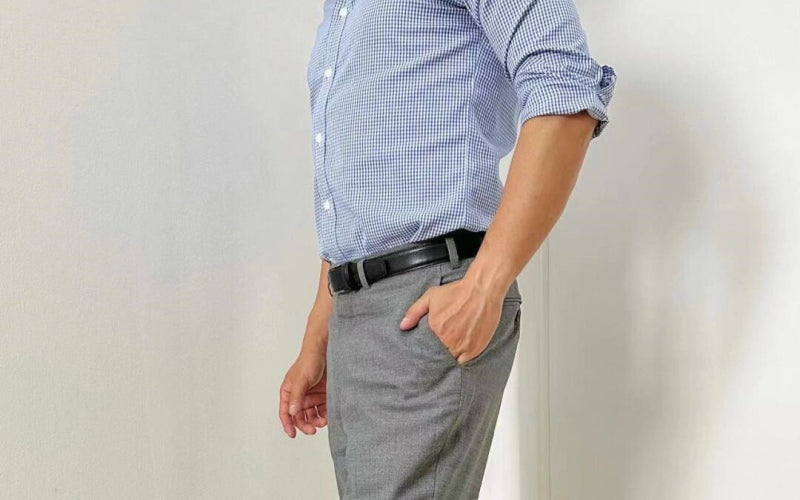
Your first black belt should be a dress belt — slim (1.25"–1.38"), clean edges, simple buckle. No rivets. No studs. No personality whatsoever. Save that for belt number three.

How Many Belt Colors Does a Man Actually Need?
Five. Five belt colors will cover 99% of every outfit situation you'll encounter in your lifetime. That sounds like a lot until you realize most men own more hot sauce varieties than belts.
Here's the priority order, ranked by how much wardrobe coverage each color adds:
| Priority | Color | Covers | Pairs With |
|---|---|---|---|
| 1 | Black | Formal, business, evening | Black shoes, charcoal suits, dark jeans |
| 2 | Dark brown | Business casual, smart casual | Brown shoes, navy suits, khakis, earth tones |
| 3 | Cognac | Casual, weekend, warm palettes | Tan shoes, light suits, denim, autumn tones |
| 4 | Tan / Light brown | Summer, relaxed, linen weather | White sneakers, light chinos, pastels |
| 5 | Espresso | Versatile dark neutral, bridge piece | Works where both black and brown feel wrong |
With belts #1 and #2, you're at about 80% coverage. Add #3 and you're at 90%. The last two are for men who want to be annoyingly well-dressed at all times. According to Effortless Gent's men's belt FAQ, the bare minimum is two — one black, one brown — but two belts handling your entire wardrobe is like two tires handling your entire car. Technically possible. Not recommended.

Why Does Black Come Before Brown?
Black comes first because it has no bad pairings in formal contexts. You will never get fired for wearing a black belt to a meeting. You might get fired for wearing a tan belt to a board presentation. Life isn't fair. Plan accordingly.
Brown is the more versatile color for casual wear — it works with navy, olive, burgundy, cream, denim, and basically every color that isn't black. But brown at a funeral? Brown with a tuxedo? Now you're the guy people whisper about at the reception. The Cotton London's belt style guide positions dark brown as the second essential because it's the safest casual-to-business-casual color, pairing with navy, grey, khaki, and most shoe colors without overthinking.
The correct order: black handles the consequences. Brown handles the fun. For a detailed breakdown of when each color wins, read our brown belt vs. black belt guide.

Does Your Belt Really Have to Match Your Shoes?
Yes. Sorry. This is the one men's style rule that refuses to die — because it actually makes sense. Your belt and shoes are the two most visible leather pieces in your outfit. When they match, everything looks cohesive. When they don't, you look like you got dressed during a power outage.
According to Primer Magazine's belt FAQ, the belt-shoe color match is one of the few style rules that even fashion-forward men still follow. The match doesn't need to be identical — same color family is fine. A chocolate brown belt with a slightly lighter brown shoe works. A black belt with tan loafers does not.
Here's the cheat sheet:
| Shoe Color | Best Belt Match | Acceptable Alternative |
|---|---|---|
| Black | Black | None — just wear black |
| Dark brown | Dark brown | Espresso |
| Cognac / Tan | Cognac / Tan | Light brown |
| Burgundy / Oxblood | Dark brown | Espresso |
| White sneakers | Any casual belt | Tan, cognac, or woven |
| Navy / Colored shoes | Match the tone, not the color | Dark brown or cognac |
White sneakers are the free space on this bingo card. Wear whatever belt you want. Nobody's checking. For more detailed matching guidance, check our full guide on how to match belts and shoes.

What About Bold or Statement Belt Colors?
Bold belt colors — navy, olive, burgundy, even red — exist. And they work. But they're belt number six, seven, and eight. Not belt number one.
A navy belt with a grey suit and brown shoes is a quietly excellent move. An olive belt with earth-toned chinos looks rugged and intentional. According to Stag Provisions' 2026 wardrobe essentials guide, accessories that show personality within restraint are the mark of a well-dressed man. The trick is that statement colors work best when they're the only statement. Navy belt with a patterned shirt and printed pocket square? Now you're a circus.
For men looking to add personality without going full statement, BELTLEY's belt color collection includes options across the spectrum — from classic black and brown to blue, green, and espresso in full-grain leather that looks better the longer you wear it.

What Belt Color Goes with Jeans?
Brown. Almost always brown. Jeans are casual. Brown is casual. They're best friends. A dark brown or cognac belt with blue jeans and a simple shirt is one of the most reliable outfits a man can assemble.
Black belts with jeans work too — especially with black or dark indigo denim and a monochrome outfit. But brown with blue denim has a warmth that black can't match. According to Buckle My Belt's men's style guide, a medium-brown belt in a 1.5" width is the ideal everyday jean belt. It's casual enough for weekends and polished enough for smart-casual workplaces. For our full denim pairing breakdown, read what color belt goes best with blue jeans.

The Bottom Line
What color belt should every man have? Start with black and dark brown — they'll carry you through most of adult life. Add cognac for weekends, tan for summer, and espresso for the in-between moments.
Five belts, five colors, 99% of your wardrobe solved. The order matters: black first for formal coverage, brown second for casual range, then build outward based on your shoe collection and lifestyle. Quality matters more than quantity — one full-grain leather belt in the right color outperforms three cheap belts that crack by March.
Every BELTLEY men's belt is handcrafted from full-grain leather with 316L stainless steel or solid brass buckles, backed by a 10-year warranty and free worldwide shipping. Browse our men's belts by color — black, brown, or espresso — and start building a collection that actually covers your wardrobe.

Frequently Asked Questions
Q: Can you survive with just one belt color?
Technically, yes. Emotionally, your outfits will suffer. If you're buying only one belt, make it black — it handles formal and dark-casual situations better than any other color. But adding a dark brown belt as your second purchase doubles your outfit options overnight.
Q: Is espresso the same as dark brown?
Close, but not quite. Espresso has a reddish-brown undertone that sits between true brown and black. It's darker and richer than standard dark brown, which makes it a useful bridge belt — it works in situations where brown feels too warm and black feels too stark.
Q: Should your belt match your watch strap?
Ideally, yes — or at least stay in the same color family. A brown leather watch strap with a brown belt creates a polished, coordinated look. But it's a bonus, not a rule. Matching your belt to your shoes matters more. Read our guide on whether your belt buckle should match your watch for the full picture.
Q: What belt color works with grey pants?
Almost any neutral belt works with grey pants — that's what makes grey so versatile. Black is the safe choice for formal grey suits. Dark brown or cognac adds warmth to lighter grey trousers. Match the belt to your shoe color, and grey pants will cooperate with whatever you pick.
Q: Do the same belt color rules apply to casual belts?
The matching principle stays the same, but casual belts give you more room to play. A woven or braided belt in tan or olive pairs beautifully with chinos and sneakers without needing to perfectly match your shoes. Casual settings forgive more than formal ones — but matching still looks better than not matching.